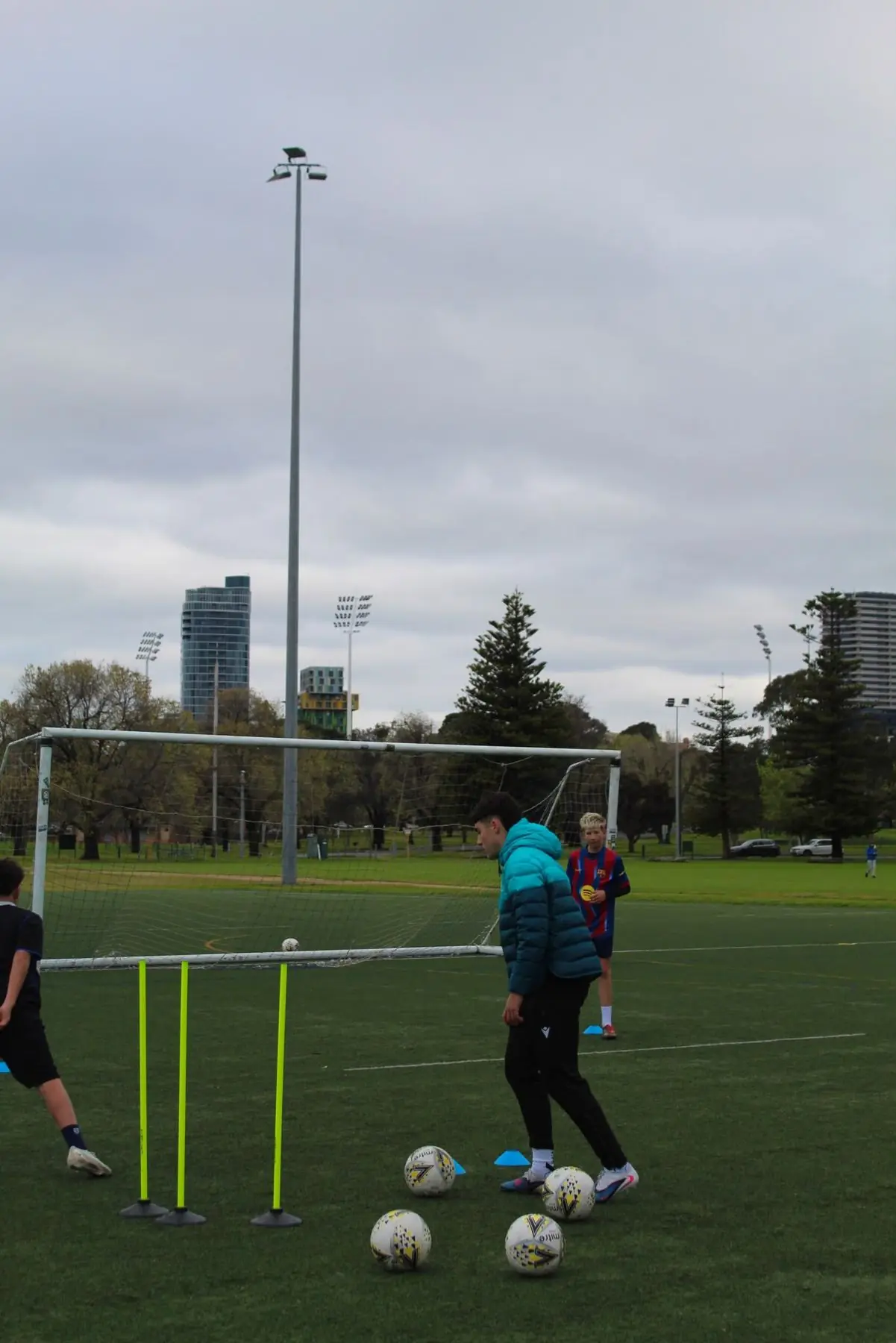
Soccer passing training in Melbourne.
Better passes, played at the right moment, with the right weight.
Book a sessionWhat makes a good pass
A good pass is more than accurate. It has the right weight, arrives at the right time and goes to the foot that suits the next action. Passing training builds all three.
- Technique: a firm planted foot, a locked ankle and contact through the middle of the ball.
- Weight: hard enough to arrive, soft enough to control.
- Timing: passing as the teammate moves, not after.
- Disguise and choice: picking the right option under pressure.
Passing drills to try
- Wall passes. Pass against a wall with each foot, one touch where possible.
- Gates. Pass through small cone gates from increasing distances.
- Pass and move. Pass to a partner and sprint to a new position, then receive again.
- Under pressure. Add a passive defender, then an active one.
Receiving is half of passing
Players who receive well pass well. Pair this work with receiving and turning and first touch. For the next step, read our guide on how to improve passing in soccer.
Common passing mistakes
- Looking only at the ball and not the teammate.
- Passing too hard or too soft, then blaming the receiver.
- Always using the stronger foot.
- Passing and then standing still instead of moving.
Good to know.
How do I make my passes more accurate?
Plant the non-kicking foot beside the ball, lock the ankle and follow through towards the target. Practise with both feet.
What is the best surface for passing?
The inside of the foot, for short and medium passes, because it has the biggest contact area.
How long should passing practice take?
Ten to fifteen focused minutes a day is plenty. See home drills.
How do I book?
Use the booking assistant on the term bookings page or email us with START.

Book your first session.
Tell us the player's age and what they want to work on.