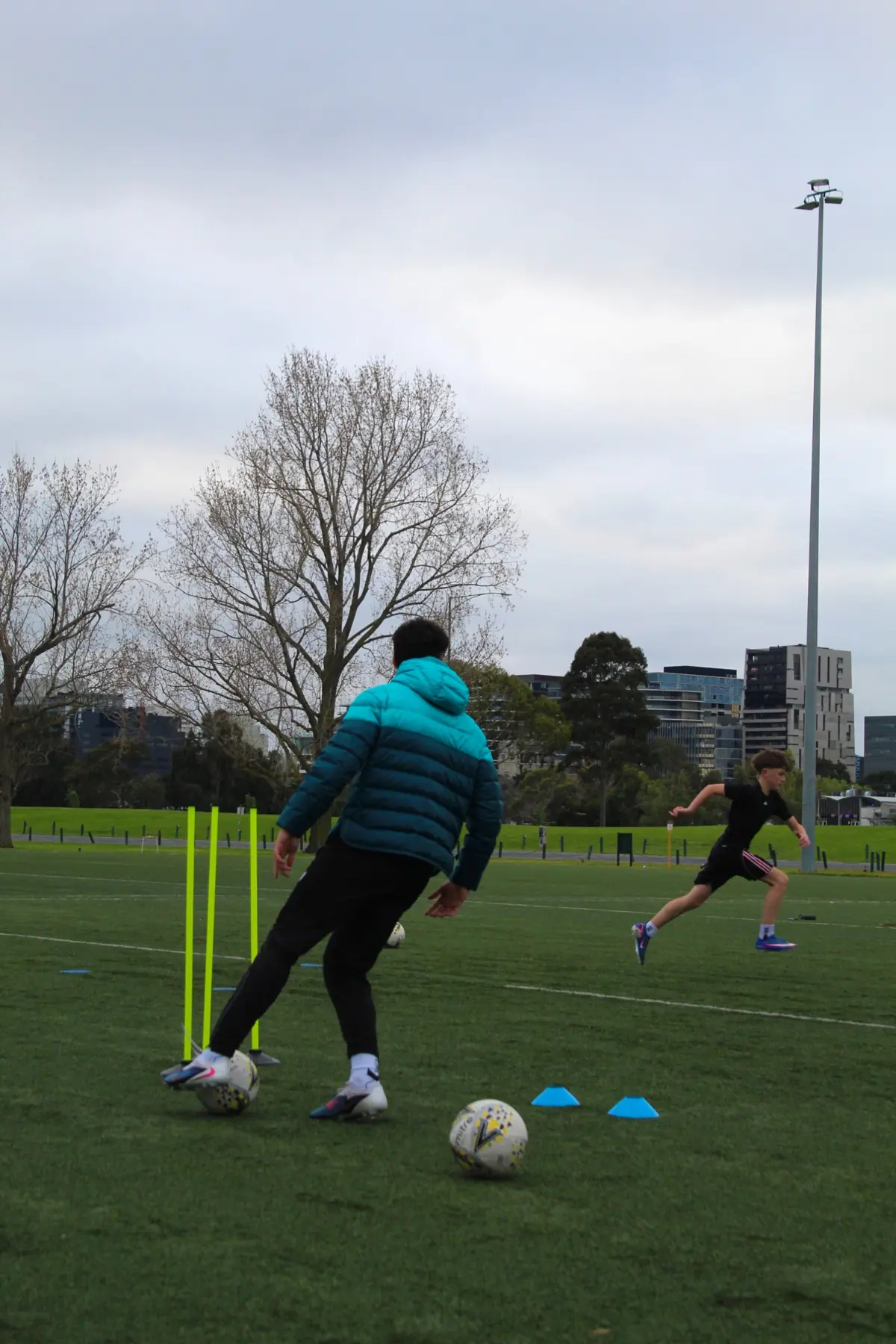
Winger training in Melbourne.
Take defenders on, deliver the final ball and know when to come back.
Book a sessionWhat wingers do
Wingers stretch the defence, take on full-backs and deliver the final ball. They also need the discipline to track back, which separates good wingers from great ones.
- 1v1 dribbling: changing speed and direction. See dribbling and 1v1s.
- Crossing and cutbacks: weight and accuracy, including with the weaker foot.
- Cutting inside: shooting or combining after beating the full-back.
- Timing runs in behind, not just to feet.
- Tracking back and defending in your zone.
Three winger practices to try
- Pace change. Dribble at a cone, slow down, then accelerate past it with a sharp touch.
- Cross both ways. Practise crossing to a target from each side with both feet.
- Cut inside and shoot. Take the ball towards a cone, cut onto the stronger foot and finish.
Developing a winger
Most wingers rely on one foot or one move. Developing a second move and the weaker foot makes them far harder to defend. Read our weak foot guide and how to dribble past defenders, then book a private session to work on it.
Common winger mistakes
- Always going the same way past the full-back.
- Crossing without looking at where teammates are.
- Dribbling into trouble when a pass is on.
- Switching off when the team loses the ball.
Good to know.
How do I get faster?
Technique matters as much as pace: first touch and body position let you accelerate earlier. Our sessions work on both.
Can I be a winger without being fast?
Yes. Timing, first touch and decision-making can beat raw pace.
Do wingers need to track back?
Yes. Modern wingers defend as well as attack, and coaches value those who do.
How do I book?
Use the booking assistant on the term bookings page or email us with START.

Book your first session.
Tell us the player's age and what they want to work on.